Perspectives on AI, manufacturing, and the future of industrial production.
AI has moved from an experimental feature to a production requirement across enterprise CNC programming. At IMTS 2026, manufacturers will see a broad range of approaches on the show floor. Here is a framework for understanding what each delivers.
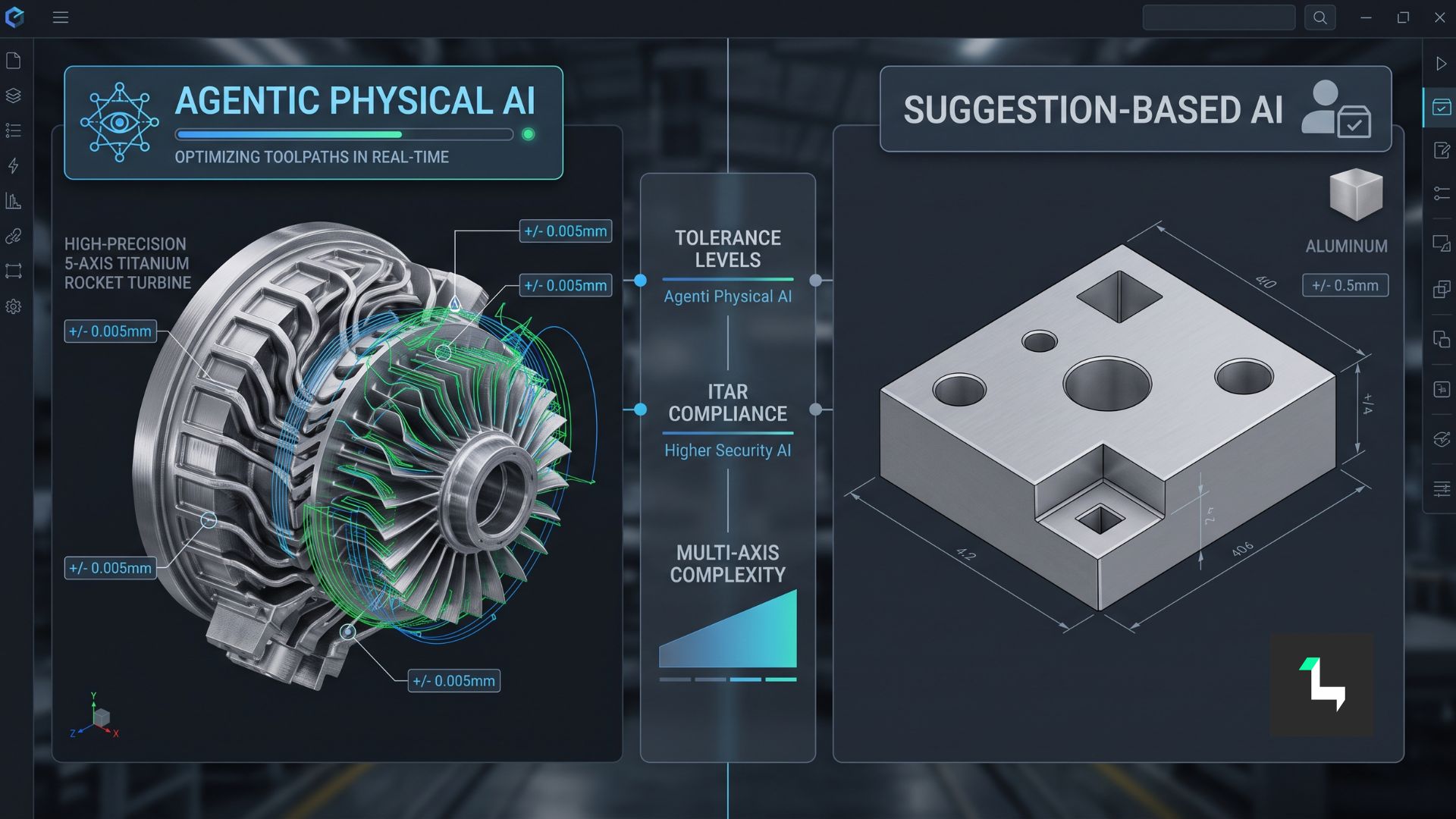
One AI CAM company announced its software is running in over a thousand facilities worldwide. Another raised $20M for Physical AI deployed in aerospace and defense. They are not the same product. Here is what manufacturing directors at precision manufacturers need to understand.
The AI CAM market has gotten crowded fast. Underneath the marketing, these tools are built on fundamentally different architectures — and that difference determines whether you end up with a tool that helps a programmer work faster, or a system that can program at scale.
The CNC programmer shortage is structural. AI copilots don't solve it. Physical AI agents that preserve expert knowledge do. Here's why the distinction matters.
From standardized posts to AI-assisted programming, these ten moves help NC teams deliver faster, more consistent results.
AI adoption in manufacturing reveals an unexpected paradox: the companies you'd expect to move fastest are often moving slowest.
These technologies emerged decades apart and developed distinct strengths. The most competitive manufacturers are using both.
93% of companies call AI vital for growth. Yet the machinists who fear displacement are the same ones who will benefit most.
Traditional CAM software requires years of expert training. The experts are retiring faster than new ones can be developed. Something had to change.
There are 600,000 unfilled manufacturing jobs in the US today. Reshoring plans assume workers that don't exist. AI is the only answer that actually works.